


Everyday Life in Short Folklore Forms
From 5 to 7 May 2026, the international conference Everyday Life in Short Folklore Forms took place in Ljubljana at the Gosposka Hall. The conference was organised as one of the concluding activities of the project Language, Culture, and Values: The Economic Image of Everyday Life in Slovenian Folklore Patterns (ARIS J6-50197), led by Saša Babič and funded by the Slovenian Research and Innovation Agency.
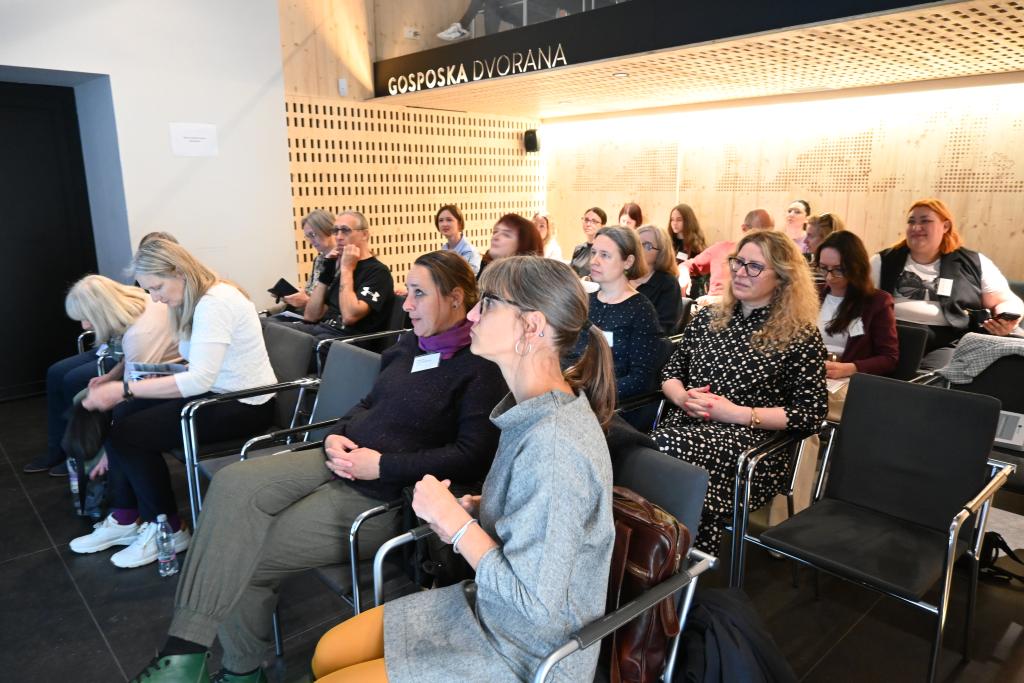
Much like the project itself, the conference approached folklore as one of the key cultural codes of everyday life. The diverse and highly engaging contributions explored what folklore can reveal about everyday life from both diachronic and synchronic perspectives, how language and culture intertwine, and how different folklore forms establish connections between the past, present, and future. As theorists of language and culture such as Bahtin and Kristeva have emphasised, nothing in culture ever truly disappears; rather, it is continuously transformed, layered with new meanings, and re-established through networks of references and interconnections.
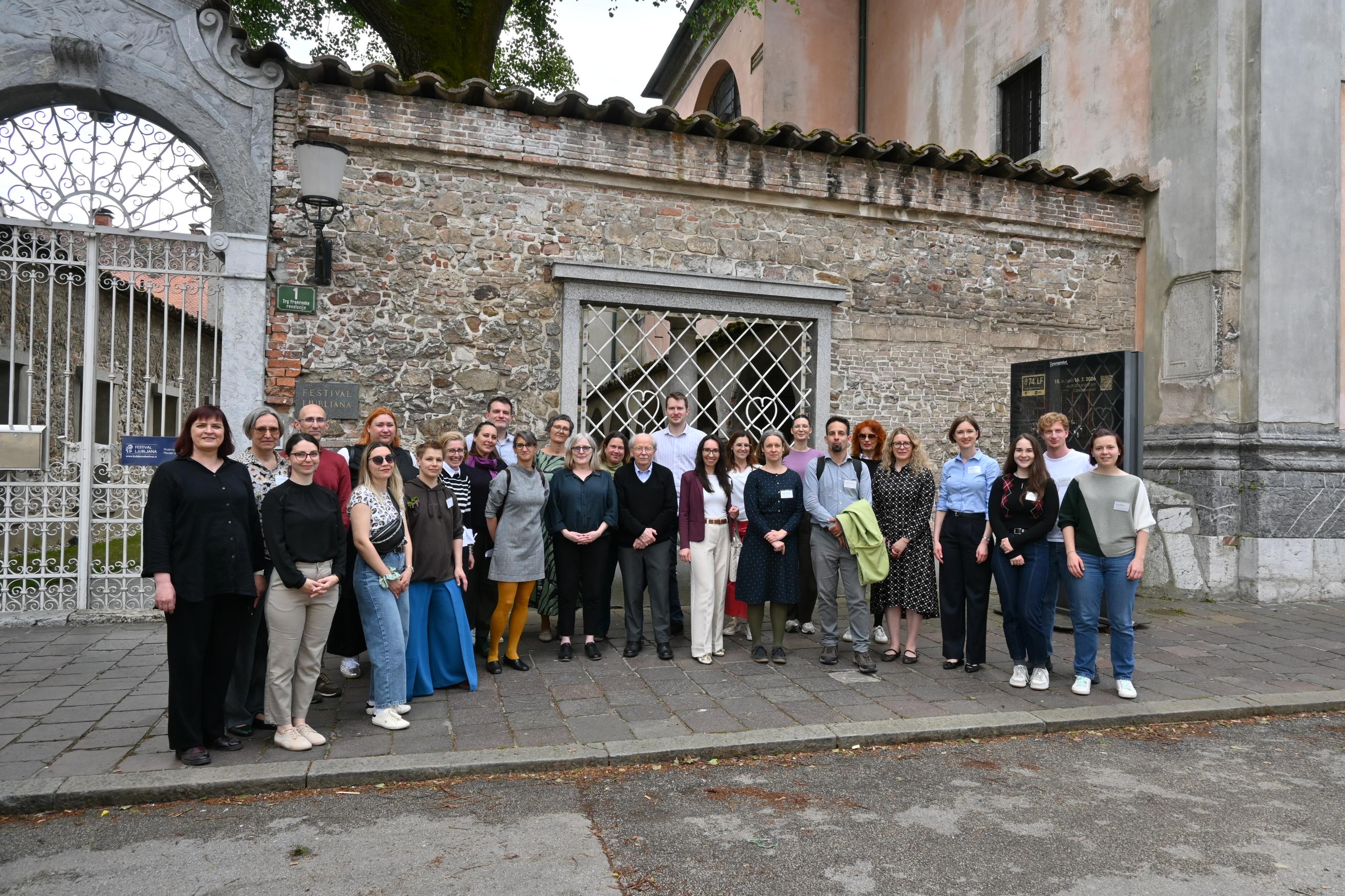
The conference was distinctly interdisciplinary and international in character. Researchers approached the expression of different domains of everyday life in folklore forms through a variety of methodological approaches, theoretical frameworks, and interpretative perspectives. Participants came from Slovenia, Lithuania, Croatia, Hungary, Austria, Ireland, Serbia, Finland, Estonia, Greece, and the United States.
Special attention was devoted both to traditional short folklore forms, such as proverbs and riddles, primarily analysed through nineteenth- and twentieth-century folklore collections, and to contemporary folklore forms and their transformations within new socio-cultural contexts. The presentations addressed modern situational sayings, family guestbooks, public inscriptions and signs related to dogs, fire commands, secret language games, memes, and various processes of the remediation of folklore forms. Particular interest was also dedicated to questions of creativity, the adaptation of traditional forms to contemporary everyday life, and new ways in which these forms circulate and acquire meaning.
Thematically, the conference was exceptionally rich and wide-ranging. Participants addressed various domains of everyday life, including representations of bribery, material well-being, moral values, advertising, time, family relations, gender roles, and different modes of communication between social groups, as well as the influence of foreign languages and expressions on everyday discourse, diligence, self-care, and the emotional and cognitive dimensions of contemporary everyday life, including stress and fear.
We were especially proud to host two plenary lectures. On the first day, Wolfgang Mieder (University of Vermont, USA) delivered a lecture entitled “The Internet Never Forgets”: The Futuristic Worldview of Modern American Proverbs. He emphasised that proverbs are universal, omnipresent, and capable of commenting on all aspects of life. Drawing on material from The Dictionary of Modern Proverbs (Mieder, Shapiro, Doyle 2012), he demonstrated how proverbs are important not only for understanding the past and present, but also for conceptualising the future. This was illustrated through examples such as “Children are our future”, “The future is not what it used to be”, “The future is a moving target”, “Dreams can’t come true unless you wake up and go to work”, and “If you can dream it, you can do it”.
On the second day, Dorothy Noyes (Ohio State University, USA) delivered the plenary lecture From “Is” to “Ought” and Back Again: Proverb and Maxim in an Economy of Abundance. Her lecture focused primarily on the position and role of proverbs in contemporary everyday life, highlighting how proverbs today increasingly resemble maxims, signalling an important epistemological shift: from a collective attempt to explain the world toward an emphasis on the role and agency of the individual within it. She also demonstrated how traditional proverbs are being transformed, minimised, and condensed into brief statements such as “It is what it is”.
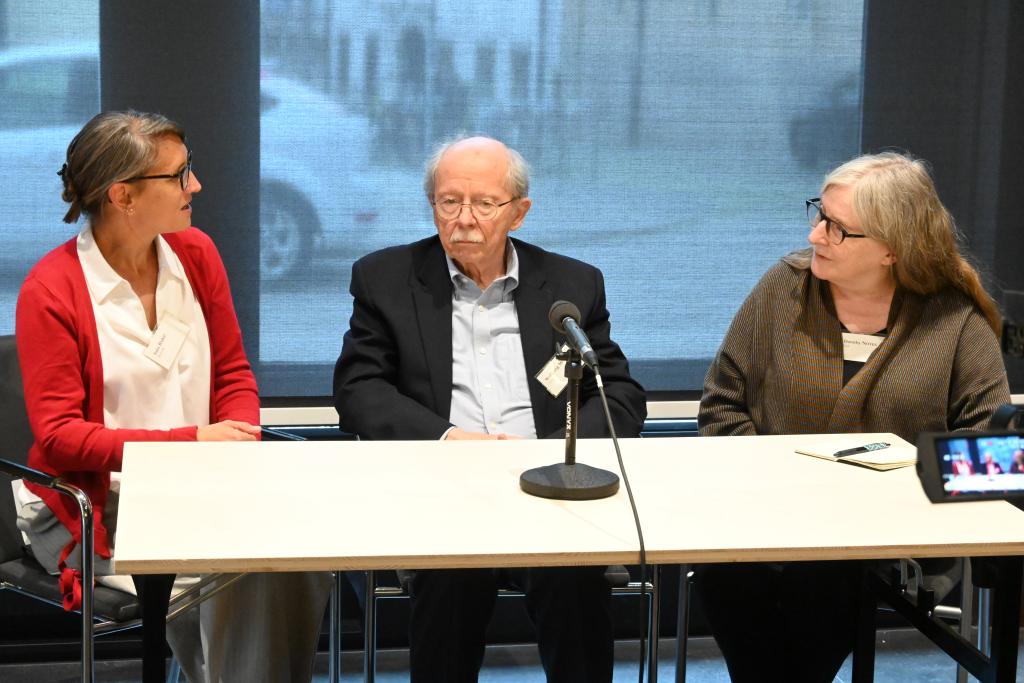
The first day of the conference concluded with a particularly engaging discussion moderated by Babič with Mieder and Noyes. They reflected on their beginnings in folkloristics, the importance of continually asking what folklore forms mean today, why certain patterns keep recurring, and how traditional forms change, transform, and acquire new meanings within contemporary social contexts.
The second day concluded with a guided tour of Ljubljana led by Urban Logar, who introduced participants to many hidden corners of the city centre and the layered traditions and stories that continue to shape the cultural memory of the city.
Everyday Life in Short Folklore Forms – Conference Program – SLN_0.pdf